

Beige Flags in 2025: The Gentle Guide to Spotting Quirks, Talking About Them, and Turning Them Into Green Flags
Welcome to the gentle side of relationship growth
Here at Thrive As Two, we believe love is built in the little moments. It is in the inside jokes, the morning coffee, the way you reach for each other’s hand without thinking. But sometimes those little moments can also be… a little irritating. Not harmful, not relationship-ending, just quirky habits that make you pause. The internet calls them beige flags.
If you have ever thought, I love them deeply, but why do they do that?, this post is for you. We are diving into what beige flags are in 2025, why they are still a trending topic, and how you can talk about them in ways that actually bring you closer.
By the end, you will have practical tools, conversation scripts, and easy connection-building ideas to turn beige into green.
What is a beige flag?
A beige flag is a small habit, behavior, or preference that is not toxic but might make you raise an eyebrow. It is somewhere between a green flag (positive, safe, aligned) and a red flag (harmful, dangerous, or unhealthy).
Think of beige flags as neutral quirks. They might be mildly annoying, confusing, or just different from what you are used to. They do not have to be a problem, but left unspoken, they can slowly create emotional distance.
Example: Your partner always leaves half-full cups scattered around the house. Not the end of the world, but after the fifth cup in two days, you start to feel a bit frustrated.
How to know if something is a beige flag
Use the Three C Test:
- Context – When and why does it happen? Is it intentional or just habit?
- Cost – Does it cause mild irritation or real emotional strain?
- Change – Is it easy to adjust with a conversation, or is it tied to deeper values?
If the cost is low and the change is easy, it is beige. If the cost is growing or tied to a deeper value clash, it might be an orange or red flag.
50 common beige flags in 2025 (and how to turn them into green flags)
Communication and tech quirks
Dry texting – One-word replies or just emojis.
Green alternative: Agree on set texting windows and use voice notes for richer conversation.
Mismatch in reply times – One expects instant responses, the other checks messages twice a day.
Green alternative: Agree on expected reply timeframes that work for both of you.
Scrolling during movie night – Phone out the whole time.
Green alternative: Create a phone-free ritual during shared activities.
Forgetting to respond in group chats – Leads to missed plans or confusion.
Green alternative: Use quick “got it” reactions or a shared couple’s calendar.
Using therapy language to dodge accountability – For example, “I don’t have the capacity” when it means “I just don’t want to.”
Green alternative: Use clear, direct language and own your choices.
Home life habits
Half-full cups left around the house
Green alternative: Designate one tray or shelf for all cups.
Multiple alarm snoozes every morning
Green alternative: Place one alarm across the room so you have to get up.
Toilet paper roll never replaced
Green alternative: Make it part of a rotating weekly chore list.
Laundry left in baskets for days
Green alternative: Set a 10-minute “laundry finish” timer in the evening.
Buying gadgets that never get used
Green alternative: Limit to one new kitchen item a month and actually plan a “use it” night.
Social and date dynamics
Different posting comfort levels online – One is fine with public couple posts, the other prefers privacy.
Green alternative: Agree on a shared boundary list for social media.
Consistently 15 minutes late to outings
Green alternative: Build in calendar reminders or alarms to leave earlier.
Talking over you when excited
Green alternative: Use a hand signal as a gentle reminder to pause and listen.
Hating to plan trips so nothing gets booked
Green alternative: Use the 2-2-2 rule to schedule at least mini adventures.
Scorekeeping past favors
Green alternative: Replace it with a weekly gratitude exchange.
Money and planning styles
Avoiding money talks – “We’ll sort it later.”
Green alternative: Have a 30-minute finance date twice a month.
Impulse buying then returning a lot
Green alternative: Use a 24-hour wish list rule before purchases.
Defaulting to takeout on busy nights
Green alternative: Keep two freezer meals ready for emergencies.
Canceling date nights often
Green alternative: Have a backup at-home date plan ready.
Overplanning vacations with zero downtime
Green alternative: Schedule one “do nothing” day into every trip.
Connection and conflict patterns
Never initiating repair after conflict – Always waiting for you to make the first move.
Green alternative: Learn and practice one go-to repair phrase each, like “Can we start fresh?”
Avoiding eye contact during hard talks
Green alternative: Have difficult conversations while walking or sitting side by side.
Skipping small affection moments – No hello hug or goodbye kiss.
Green alternative: Add three daily micro touches like hand squeezes or hugs.
Turning every problem into a joke – Using humor to deflect.
Green alternative: Name it when humor is blocking the real talk.
Never asking about your day – Missing easy check-in moments.
Green alternative: Ask two open-ended questions each night.
Personal quirks that spill into couple life
Loud chewing or slurping
Green alternative: Each name one pet peeve and agree on a fix.
Constantly forgetting appointments
Green alternative: Share a synced calendar with reminders.
Using speakerphone in public
Green alternative: Use headphones or text instead.
Needing background noise to sleep
Green alternative: Compromise with white noise.
Jumping between topics mid-conversation
Green alternative: Keep a shared note to track ideas.
Digital culture overlaps
Tracking every argument like a “relationship report” – Inspired by trends like “Dating Wrapped.”
Green alternative: Use the same format to track wins and fun memories instead.
Posting couple content that reveals private info
Green alternative: Create a privacy checklist before posting.
Flirting in comment sections and calling it harmless
Green alternative: Agree on digital flirting boundaries.
Keeping exes on social media and claiming it’s “just for memes”
Green alternative: Use the mute feature and have a transparency check-in.
Watching your stories without ever responding (orbiting)
Green alternative: Decide together whether silent viewing is fine or not.
Shared responsibility and self-care
Leaving all household admin to one person
Green alternative: Rotate admin tasks weekly.
Using work stress as a blanket excuse for everything
Green alternative: Set a 15-minute vent limit, then move into solutions.
Never booking medical or dental appointments
Green alternative: Book appointments together while having coffee.
Needing you to start every chore
Green alternative: Try body doubling, doing tasks together in real time.
Only cleaning when guests are coming over
Green alternative: Schedule a weekly 45-minute tidy-up session.
Intimacy and togetherness
No non-sexual touch outside of bed
Green alternative: Add a 6-second kiss and three 20-second hugs daily.
Avoiding deeper conversations
Green alternative: Use conversation prompt cards once a week.
Laughing when intimacy topics come up
Green alternative: Agree on a safe phrase like “pause” or “try again” if someone feels awkward.
Repeating the same two date ideas forever
Green alternative: Rotate in one new micro-experience each month.
Ending every argument with “fine”
Green alternative: Replace “fine” with “I need five minutes” and revisit.
Lifestyle and values
Opposite weekend rhythms – One loves sunrise hikes, the other loves slow mornings.
Green alternative: Alternate weekends or split mornings and afternoons.
Disagreeing over pets on the bed
Green alternative: Try seasonal rules or a washable cover compromise.
Complex coffee orders and judging yours
Green alternative: Swap orders for fun and call it a taste test.
Forgetting your food preferences
Green alternative: Keep a shared grocery list with notes.
Talking about you to others instead of to you when upset
Green alternative: Use the 24-hour rule, bring it to each other first.
How to talk about beige flags without starting an argument!
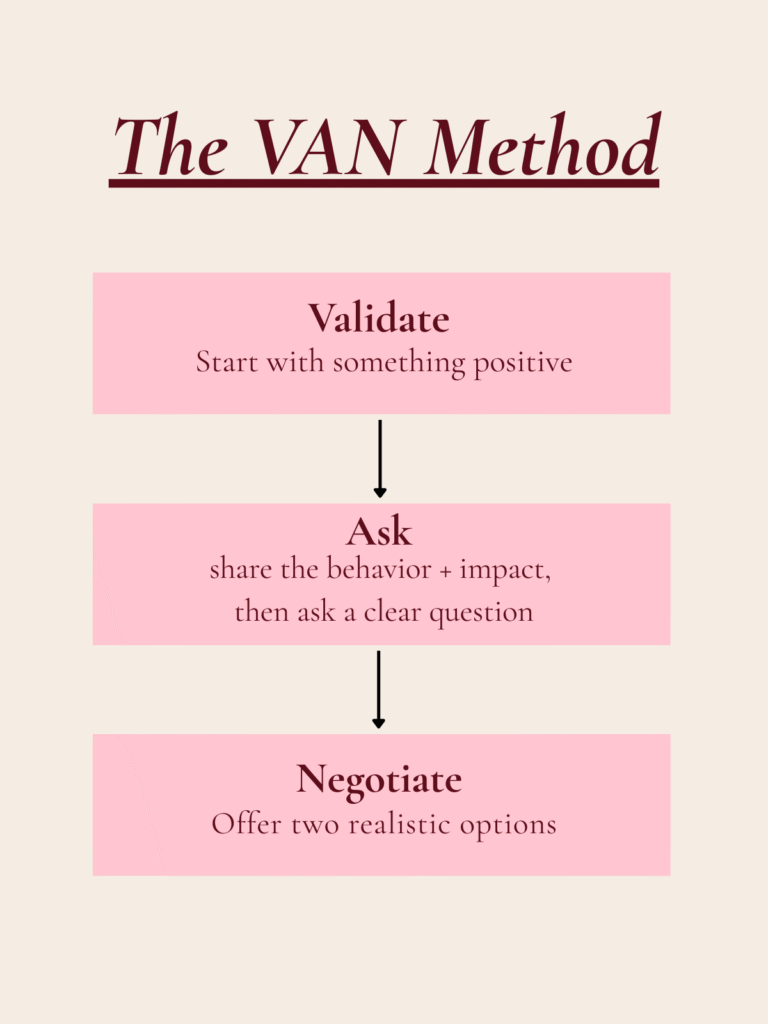
At Thrive As Two, we believe that even tricky topics can be handled with care. One of our favorite tools is the VAN Method:
- Validate: Start by appreciating something about your partner.
- Ask: State the behavior and how it impacts you, then ask a clear question.
- Negotiate: Offer two realistic options for change.
Example: Dry texting
Validate: “I love when we’re in sync during the day.”
Ask: “When replies are super short, I sometimes read it as disinterest. Could we try voice notes after 6 pm?”
Negotiate: “We could do a quick 10-minute call in the evening, or send two voice notes each.”
Scripts you can use right away
Text script (neutral)
“Hey, I noticed I feel more connected when we swap voice notes instead of short texts. Can we try that this week?”
Text script (playful)
“Voice note me your day in 60 seconds. Winner gets dessert.”
Call script
“I love our movie nights. Can we try putting phones away during the film this week and see how it feels?”
In-person script
“This is a tiny thing but it matters to me. When phones are on the table, I feel split. Can we try the phone bowl idea for dinners?”
The one-week beige flag reset plan
Day 1: Each pick one beige flag to focus on.
Day 2: Agree on one small change that could help.
Day 3: Add tools or reminders to support it.
Day 4: Practice the change once and talk briefly about it.
Day 5: Do a connection-boosting activity together.
Day 6: Review what worked and what didn’t.
Day 7: Keep the change if it helped, or pick a new one for the next week.
When a beige flag is not beige
It is important to remember that beige flags are not about harmful behavior.
If your partner’s actions involve:
- Control over your choices or freedom
- Humiliation, insults, or name-calling
- Lying or manipulation
- Financial abuse or control of money
- Isolating you from friends and family
These are not beige flags. These are red flags and they require a different type of support and conversation. In these cases, focus on your safety and seek help from trusted friends, family, or professional services. Love should always feel safe, never dangerous.
The quirks you notice in each other are not necessarily warning signs. They are often just the texture of a shared life, the little differences that make your relationship uniquely yours.
When you see them as opportunities to connect, rather than irritations to silently endure, you open the door to deeper intimacy. You learn each other’s rhythms, build shared rituals, and create a relationship where love feels like home.
You do not need to fix every beige flag. Start with one that matters to both of you, work on it together, and celebrate the progress. Small wins build trust, and trust builds everything else.
If you try the One-Week Beige Flag Reset, we would love to hear how it went. Share your experience in the comments.
Quick checklists to make it easier
Beige Flag Audit
- Name one beige flag each, not five
- Describe its impact in one sentence
- Choose one small change
- Put it in your shared calendar
- Review after one week
Green Habit Builder
- Weekly power clean together (45 minutes)
- One tech-free dinner per week
- Two open-ended questions nightly
- 20-minute Sunday planning check-in
- Daily affection ritual (6-second kiss or 3 hugs)






Your writing has a luminous patience. Ideas are revealed gradually, letting the reader absorb them fully and discover connections that might otherwise be missed.